
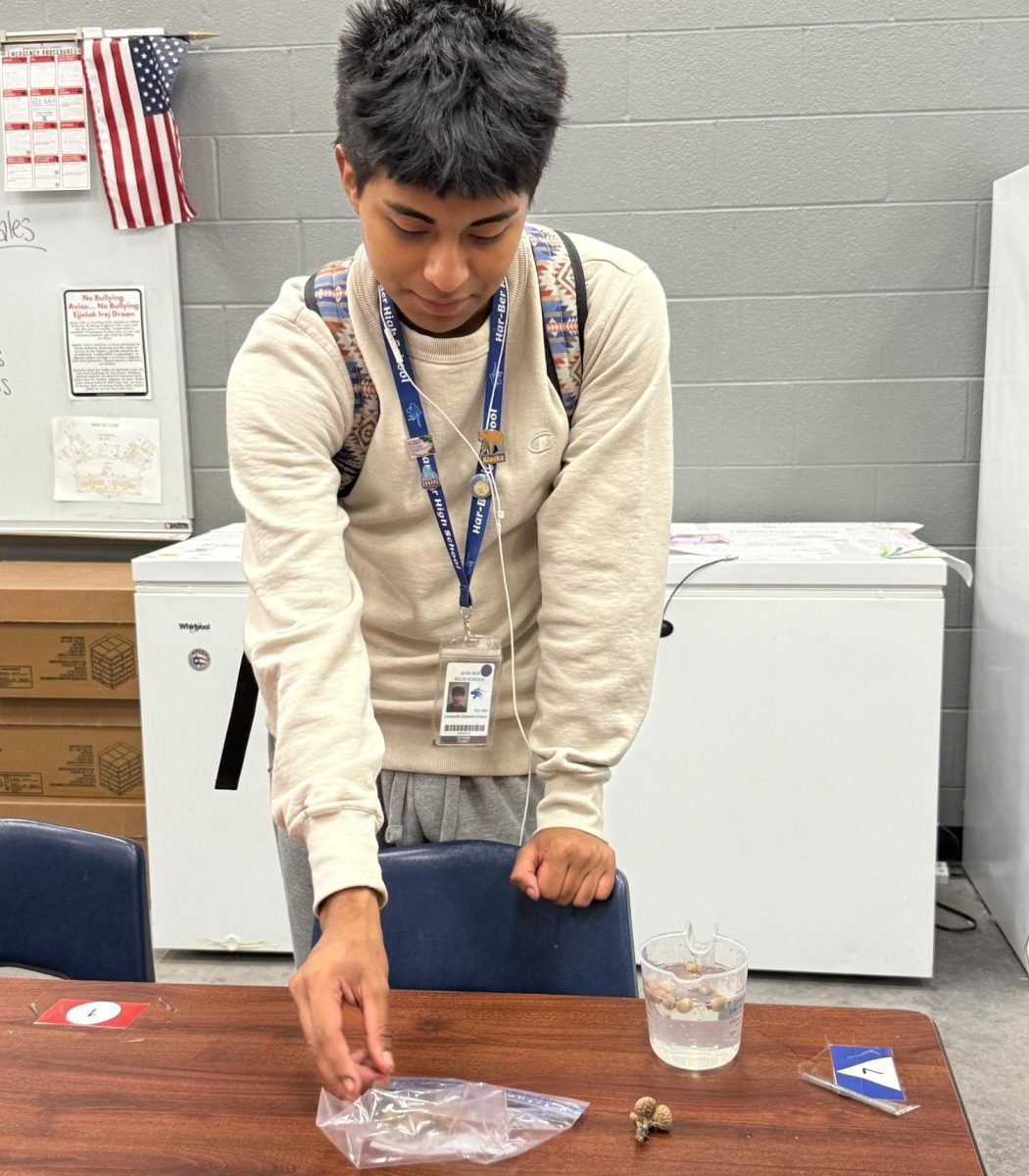
Senior Leo Jimenez has planted 700 trees combined. Through the course of his FFA supervised agricultural experience, he has assisted in many tree planting projects.
“These tree planting projects aim to improve watershed conditions by reducing the impact of erosion and decreasing sedimentary pollution while also providing habitat for wildlife. Aside from this, I have also started a student-led tree nursery operation at the school in which I grow Arkansas native trees.” Jimenez said.
The species of trees is chosen to minimize the impact of non-native species, as they outcompete native species.
“I heavily prioritize growing ONLY Arkansas native tree species such as, Black Walnut, Red/Sugar/Silver Maples, American Elm, and White Oaks,” Jimenez said. “Producing native trees can provide habitat for wildlife and food from nut dropping trees such as Pecan, Hickories, and Oaks. White Oaks are especially favored by white tailed-deer, the Arkansas state mammal.”
The trees are planted near different bodies of water in the Ozarks.
“These are ecosystems located along the edges of streambanks. They were chosen by where the Illinois River Watershed Partnership and Beaver Watershed Partnership saw needed trees the most,” Jimenez said.
Reforestation is a contributing factor to maintaining our environment.
“Reforestation is a long-range goal to accomplish, as growing trees takes years and proper care. Growing trees should be done as soon as possible to ensure that populations can sustain themselves independently after reaching maturity,” Jimenez said.
Jimenez began working on this project in his sophomore year of the FFA class.
“Upon joining FFA, I joined the Forestry Career Development Event (CDE) Team where I learned more and more about the importance of trees in Arkansas,” Jimenez said. “This further inspired me to try to take part in the care of our natural resources and protection of our diverse ecosystems.”
Jimenez has always had an interest in growing plants in his free time.
“When I was given the opportunity to start my tree nursery operation, I was inspired to use my knowledge of growing plants and apply it to something that can help benefit others,” Jimenez said.
Jimenez’s favorite tree is the Ozark Chinquapin. The tree was once widespread throughout the Ozark highlands.
“It has since been on the edge of extinction due to the introduction of the Chestnut Blight, a parasitic fungus that harms chestnut trees in the United States and has depleted many species populations. I was able to obtain some seeds from a member of the Ozark Chinquapin Foundation at Hobbs State Park Conservation Area to hopefully grow in 2026. The Ozark Chinquapin Foundation is an organization dedicated to restoring this tree to its historical range. They have made progress with gradually enhancing the genetic blight resistance of Ozark Chinquapins by cross-pollinating blight-resistant trees on test plots.”
Growing up in Northwest Arkansas has been a major inspiration for Jimenez’s pursuit of a career in Wildlife Biology and Habitat Management.
“Growing up, I would often go on hikes on local trails and view all the different types of wildlife within our area,” Jimenez said. “I have a great appreciation and admiration for the place I live in, which is why I first decided to plant trees and help out our community, as they are key factors in a lot of different environments.”
Working on this project, Jimenez has set himself up for success in his chosen career field.
“The experience I have gained has already helped shape my future career and goals as a Wildlife Biologist and Habitat Manager. With these projects, I have been able to meet professionals in these fields and assist in real field work that can be a large part of the career I am pursuing.”
With the environment’s depletion being high on people’s minds, many students feel lost when trying to figure out how to help. Jimenez plans to have planted 1000 trees by the end of his senior year and has advice for how others can make a difference.
“The key to making a difference is finding an issue that lacks major focus and planning a realistic solution that can be accomplished with lots of research and dedication.”